



















The best Zip/Unzip tool for Mac users
How do I open RAR files on the Mac? How do I archive password-protected files on the Mac? How do I open 7z.001, zip.001, rar.001, and multi-volume archive files? How do I zip files and folders on the Mac?
Why do we need a 3rd-party zip/unzip tool for the Mac? There's already a built-in archive utility for the Mac that works well. The answer: RAR files. This is the top reason to have a 3rd-party application on your Mac. You can archive files and folders that have a password. But when searching for a good unarchiver for Mac, finding one is not easy. There are dedicated Mac unarchive apps to unzip compressed files with limited features. But, if you're looking for free solutions to unzip or compress files on the Mac, there are very few good-quality apps to accomplish file compression. We have listed the best unarchive apps for the Mac that are available. Some are free, others you'll have to pay for. These unarchiver apps for the Mac provide premium features.
1. Oka Unarchiver
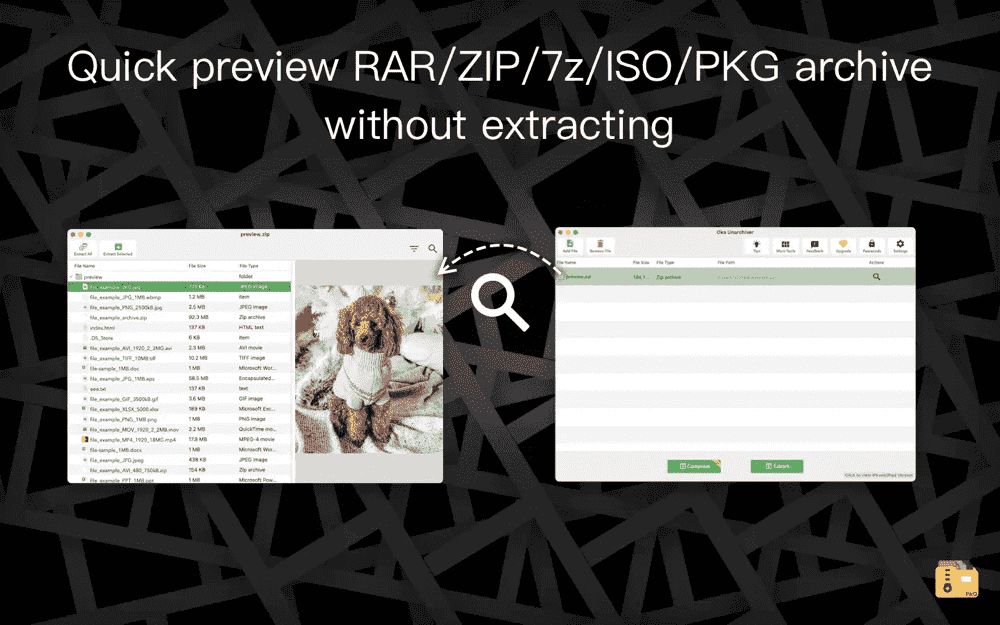
Oka Unarchiver can zip or unzip files on the Mac and open any archive in seconds. It is the only app you need to open RAR on the Mac. It even supports a password book to help you unzip files with a password. You don't have to extract the whole thing if you only need a few files or folders from a more extensive archive like a RAR Mac file or any other compressed file format. Just drag the files you need from the Oka Unarchiver window to any Finder window or the desktop.
Key Features:
- [ ] Password protection with AES-256
- [ ] Preview/Modify existing archives
- [ ] Drag and drop archives
- [ ] Multi-volume archive support
- [ ] System right menu support
Unarchive From:
Popular formats: Zip, RAR, 7z, Tar, Gzip, Bzip2, LZMA, XZ, CAB, MSI, NSIS, EXE, ISO, BIN, MDF, NRG, CDI, Split files
Old formats: Stufflt, Stufflt X, DiskDoubler, Compact Pro, Packlt, Cpio, Compress (.Z), ARJ, ARC, PAK, Ace, Zoo, LZH, ADF, DMS, LZX, PowerPacker, LBR, Squeeze, Crunch
Unusual formats: XAR, RPM, Deb, Ar, ALZip, WARC, NSA, SAR, NDS, SWF, PDF
Archive To:
ZIP
Oka Unarchiver Website: Best rar extractor on Mac
Download from: Oka Unarchiver on Mac App Store
2. The Unarchiver
The Unarchiver is a small, easy-to-use program that can unarchive many kinds of archive files. The Unarchiver app will open common formats such as Zip, RAR (including v5), 7-zip, Tar, Gzip, and Bzip2. It will also open many older formats, such as StuffIt, DiskDoubler, LZH, ARJ, and ARC.
It will open other files, like ISO and BIN disc images and some Windows.EXE installers. The list is much longer – see the program homepage for the complete list.
3. Winzip
Winzip can zip or unzip files on the Mac and open .7z files on the Mac. Winzip on the Mac supports email and can share files directly to Dropbox and Google Drive. WinZip for Mac is packed with tools to maximize your productivity and minimize file sizes. You can use Winzip to zip and unzip files instantly on the Mac. Protect confidential data with strong AES encryption and share directly to Dropbox and Google Drive.
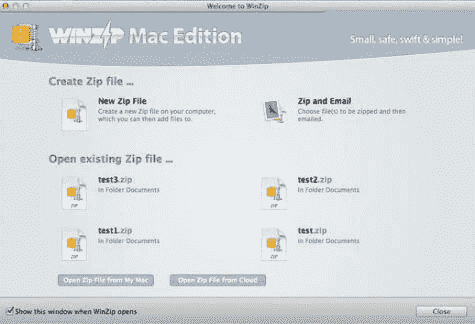
Using the' Zip and Burn' feature, this unarchiver app can back up photos and projects and fit more onto CDs or DVDs. You can use Mac’s ‘Quick Look’ tool to browse a zip file's contents before you decide to unzip it.
The WinZip Mac Edition helps you over the hurdle of sharing or receiving compressed folders or archives from PC users. WinZip keeps files completely secure with strong 128-bit or 256-bit AES encryption for password-protected files.
Key Features:
- Password protection with AES-256
- View contents without extracting
- Modify existing archives
- Search within archives
- Selective file extract
- Cloud support for iCloud Drive, Dropbox, and Google Drive
Extract File Formats: RAR | 7Z | BZ2 | LHA | LZH | CAB | ISO | IMG | TAR | GZ | TAZ | TGZ | TZ | Z | Uuencoded | XXencoded | MIME | BinHex | Zipx | Zip
4. Better Zip
BetterZip 2 is a powerful archive manager for the MAC. You don't have to extract the whole thing if you only need a few files from a larger archive. Just drag the files you need from the BetterZip window to any Finder window or the desktop.
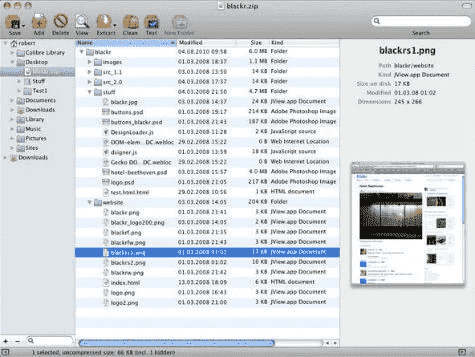
BetterZip allows opening archives without extracting. You can drag files and folders from your hard drives, disks, or network places into a new compressed file. You no longer have to copy all the files into a temporary folder first and can split large archives.
You can add new or updated files to existing archives, remove any file or folder from an archive, or even move files around inside the archive as if it were a normal folder. BetterZip can protect your data with a password and create WinZip-compatible AES-256 encrypted archives.
Key Features:
- Password protection with AES-256
- Modify existing archives
- Remove files from an archive.
- Drag and drop archives
Unarchive From: ZIP, SIT, TAR, XAR, XZ, GZIP, BZip2, RAR, 7Zip, CPIO, ARJ, LZH/LHA, JAR, WAR, CAB, ISO, CHM, RPM, DEB, NSIS, BIN, HQX, DMG, EPUB, ZIP To ZIP, TAR, GZip and BZip2, TAR, XAR, 7-ZIP, RAR
Archive To: ZIP, TAR, GZip and BZip2, TAR, XAR, 7-ZIP, and RAR
5. iZip
iZip is a simple-to-use, efficient, and powerful utility built for the Mac with compression and encryption technology. iZip allows you to zip, unzip, secure, and share your files. You can save documents directly to a zip file or even drag-and-drop files between archives. iZIp allows browsing photos and videos in Cover Flow mode, viewing a slideshow, and also playing videos – all without having to extract anything from the file you sent.
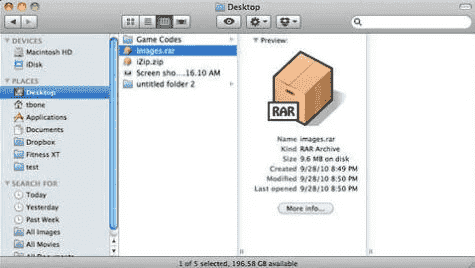
iZip features up to 256-bit AES zip encryption, so you can rest assured unauthorized users will not be able to view any of the confidential information. With iZip, you can share your archive in a few clicks using the tight integration with the wonderful, fast, and secure files.com file-sharing service. Securely send and receive files with your friends and colleagues – even those running Windows or Linux.
Key Features:
- Password protection with AES-256
- Preview archive content
- Drag and drop archives
Unarchive From: ZIP, ZIPX, RAR, TAR, TAR.GZ, and 7ZIP.
6. Keka
Keka can compress files by just dragging and dropping your desired files and folders to Keka in the Dock. You can drop as many as you want at once, and all of them will be archived into one compressed file.
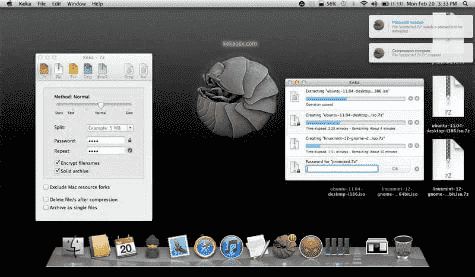
The Keka main window lets you choose your desired format to compress, like 7z, Zip, Tar, Gzip, or Bzip2. If you’re compressing a big file, you can split it into parts by just selecting the size you want, in Bytes (B), Megabytes (MB), or Gigabytes (GB). With 7z and Zip, you will have the opportunity to create password-encrypted files to protect your privacy better. You can create archives that look clean in non-Mac systems, like Linux or Windows.
Unarchive From: RAR, 7z, Lzma, XZ, Zip, Tar, Gzip, Bzip2, ISO, EXE, CAB, PAX
Archive To: 7z, Zip, Tar, Gzip, Bzip2, DMG, ISO
7. RAR Extractor
RAR Extractor Free is a specialized application program that aims at Rar, Zip, Tar, 7-zip, Gzip, and Bzip2 files, and you can use it to extract archive files conveniently, fast, and safely. This app can extract files from Rar, Zip, Tar, Gz, Bz2, and 7z files, supports extracting password-protected archive files, and also do batch extracting.
Apps to Unarchive / Archive Files on the Mac
There are a couple of paid Mac unarchiver apps in the Mac App Store that can decompress or compress files even with a password that costs between $0.99 and $29.99, depending on the features. Most of these paid Mac unarchive apps are feature-rich and well-supported by the developer.
There is no need to unzip the files all the time to see the contents of the compressed files. Most of these apps support Preview Mode and Finder Search, which help you to preview the archive file without decompressing it. Another advantage of using these apps is that most of these apps support various formats to archive and unarchive files. These apps support 256-bit AES zip encryption for your password-protected zip files.
There are dedicated Mac apps that archive and unarchive files with more features than Mac's built-in option to archive files. These Mac archiver apps offer premium features such as password protection, drag-and-drop functions for archives, etc. The unarchiver apps for Mac are available both for free and paid with additional features.